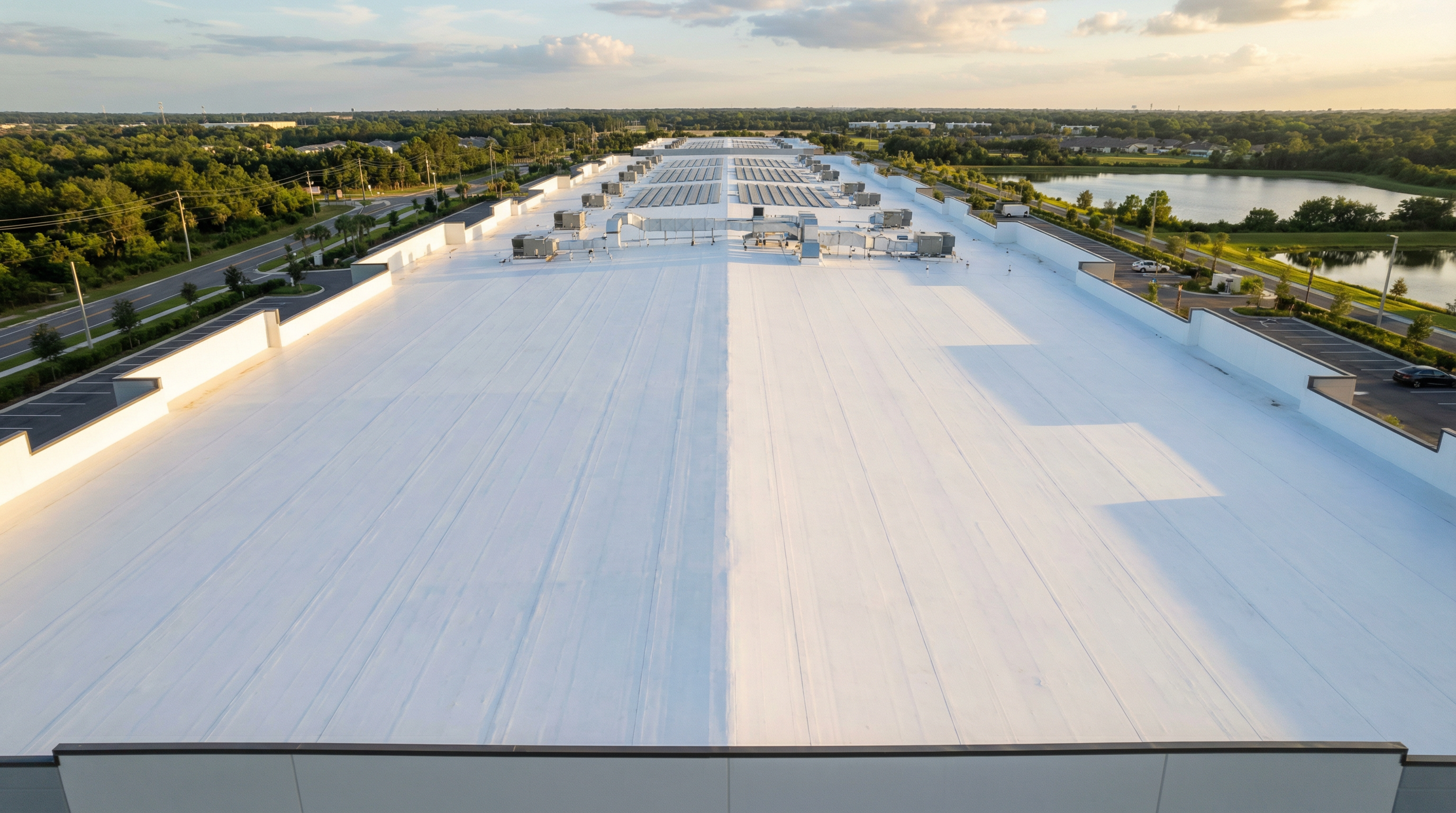
Commercial Flat Roofing Support in Greater Orlando
Technical support for commercial roofing contractors and building owners
(TPO, PVC, and EPDM systems)
Commercial roofing projects in Greater Orlando often slow down due to unclear assemblies, inconsistent details, and late documentation. This support helps contractors and building owners align early on system selection, bid scope, and warranty pathways for TPO, PVC, and EPDM roofing systems across Central Florida.
Commercial Roofing Support — Greater Orlando
Who this is for
Commercial roofing contractors, building owners and owner representatives, and design professionals involved in low-slope roofing projects in Central Florida.
Territory served
Orange, Seminole, Volusia, Osceola, and Brevard Counties (Greater Orlando / Central Florida)
Systems supported
Single-ply commercial roofing systems including TPO, PVC, and EPDM, selected based on building use, exposure, and project requirements.
Core services provided
- Assembly letters and submittal packages for commercial roofing contractors
- Bid-phase scope clarity and comparable pricing support
- System selection guidance for building owners (TPO vs PVC vs EPDM)
- Warranty pathway planning and documentation readiness
- Buildable details and spec support for design teams
- Closeout and documentation coordination
What attachment methods are available for commercial flat roofs in Central Florida?
Commercial flat roof systems in Central Florida can be installed using several attachment methods. Selection depends on wind requirements, deck type, building use, installation constraints, and long-term performance goals.
These attachment methods are commonly evaluated for commercial roofing projects in Orlando and surrounding Central Florida counties.
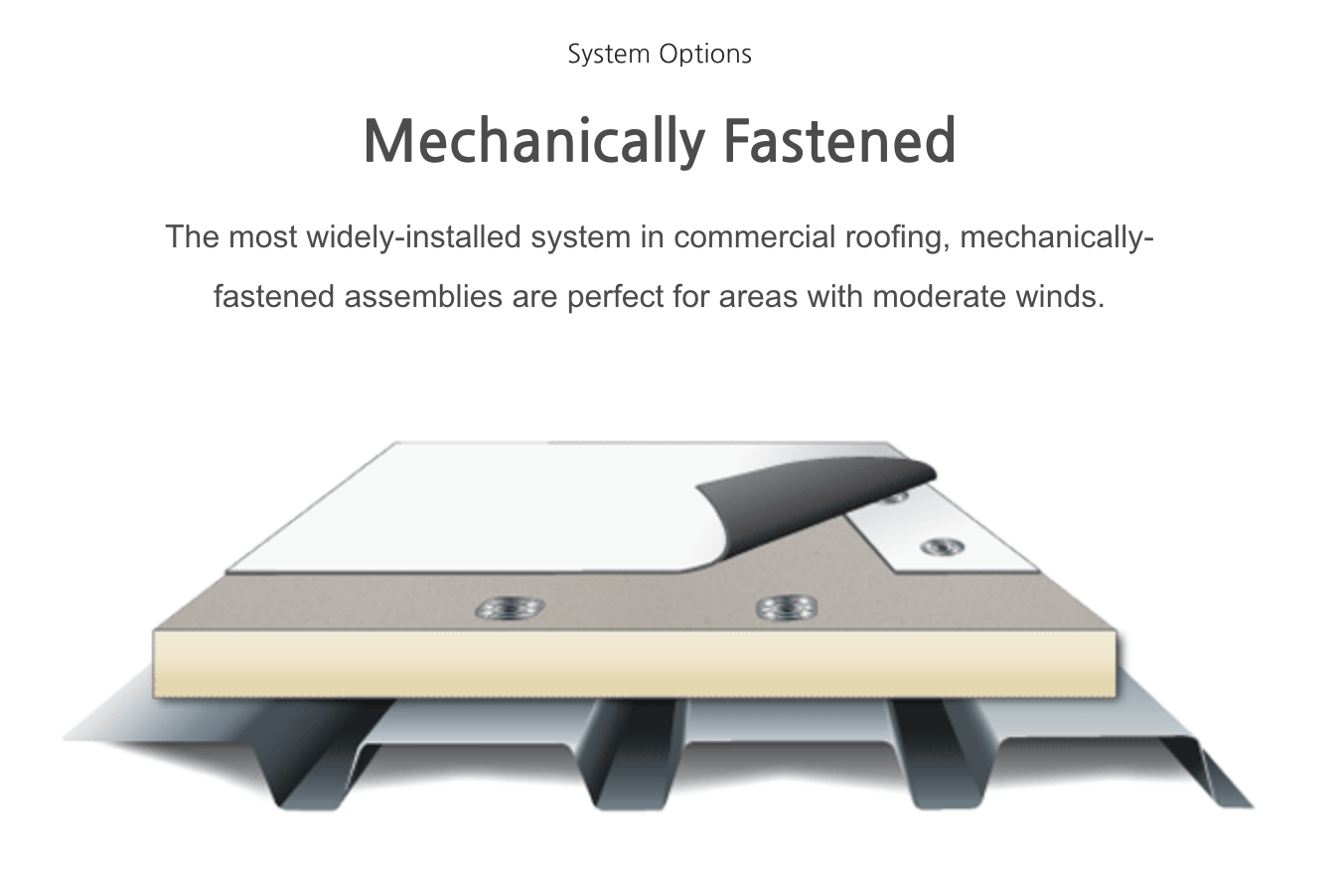
Mechanically Fastened Systems
Mechanically fastened systems are the most widely used attachment method in commercial roofing. The membrane and insulation are secured to the deck using approved fasteners and plates.
Common reasons this option is selected:
- Cost-effective for large roof areas
- Efficient installation schedules
- Suitable for many moderate wind conditions
- Familiar approach for most commercial contractors
Often used on warehouses, distribution centers, and large footprint buildings.
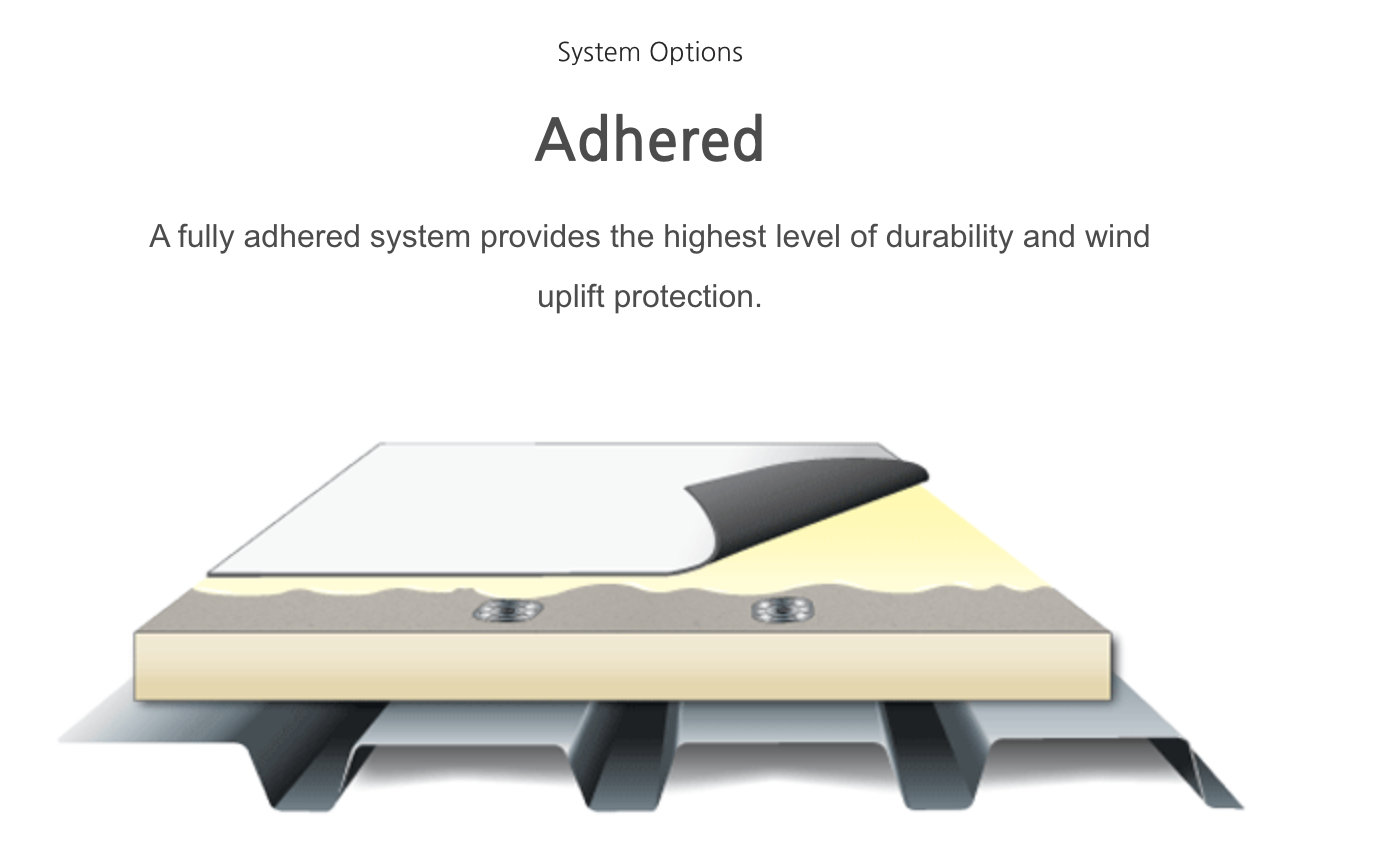
Fully Adhered Systems
Fully adhered systems bond the membrane directly to the insulation or substrate using approved adhesives. This method minimizes membrane movement and provides a smooth finished surface.
Common reasons this option is selected:
- Higher wind uplift performance
- Reduced membrane flutter and noise
- Improved aesthetics for visible rooftops
- Long-term durability priorities
Often considered for offices, healthcare, hospitality, and buildings with higher performance requirements.
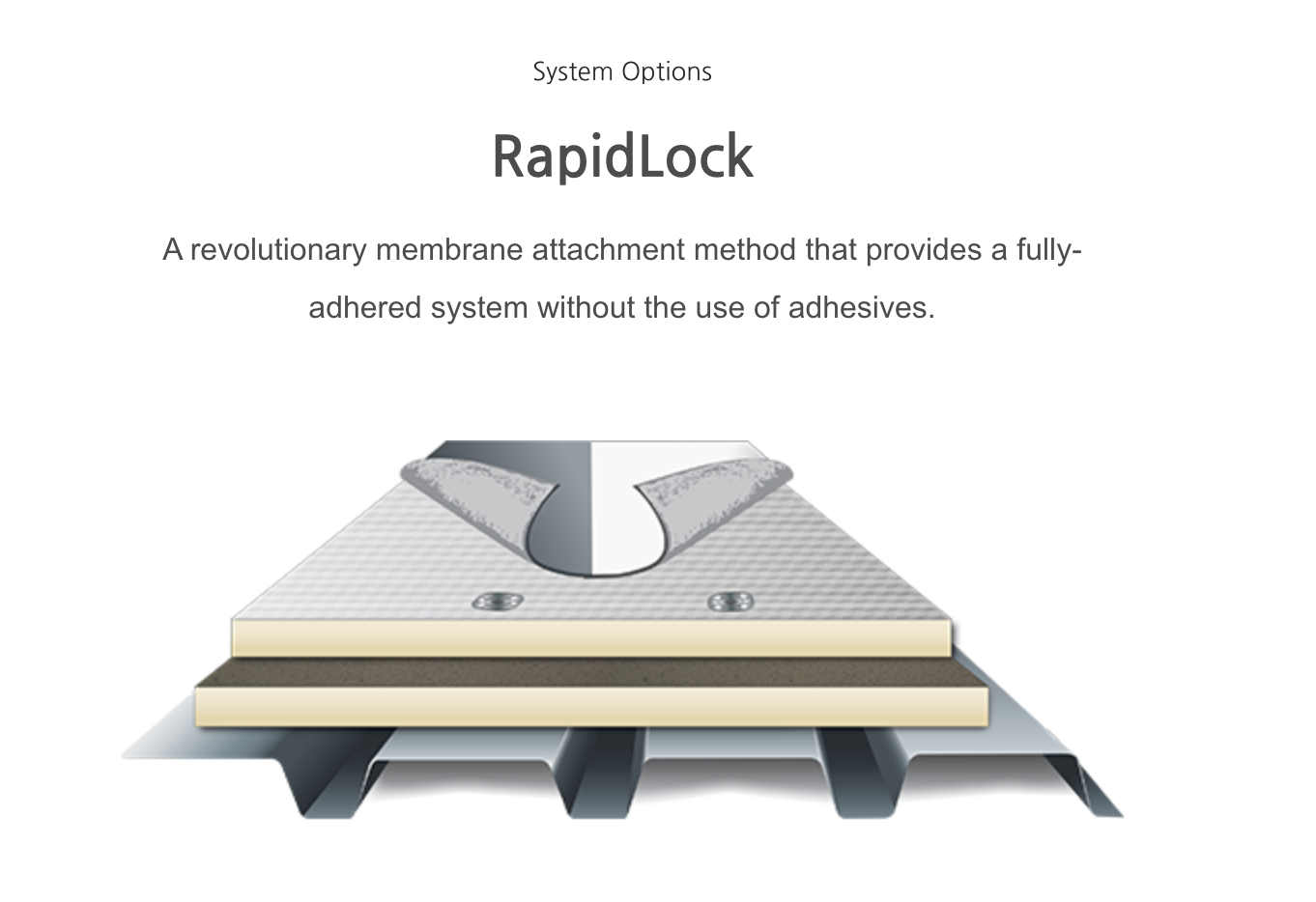
Adhesive-Free Rapid-Attached Systems
Adhesive-free rapid-attached systems achieve a fully adhered performance without the use of traditional liquid adhesives. The membrane is secured using specialized attachment technology.
Common reasons this option is selected:
- Eliminates adhesive odors and cure times
- Faster installation in certain conditions
- Reduced disruption to occupied buildings
- Consistent attachment performance
Frequently evaluated for occupied facilities, schools, and buildings where odors or downtime are a concern.
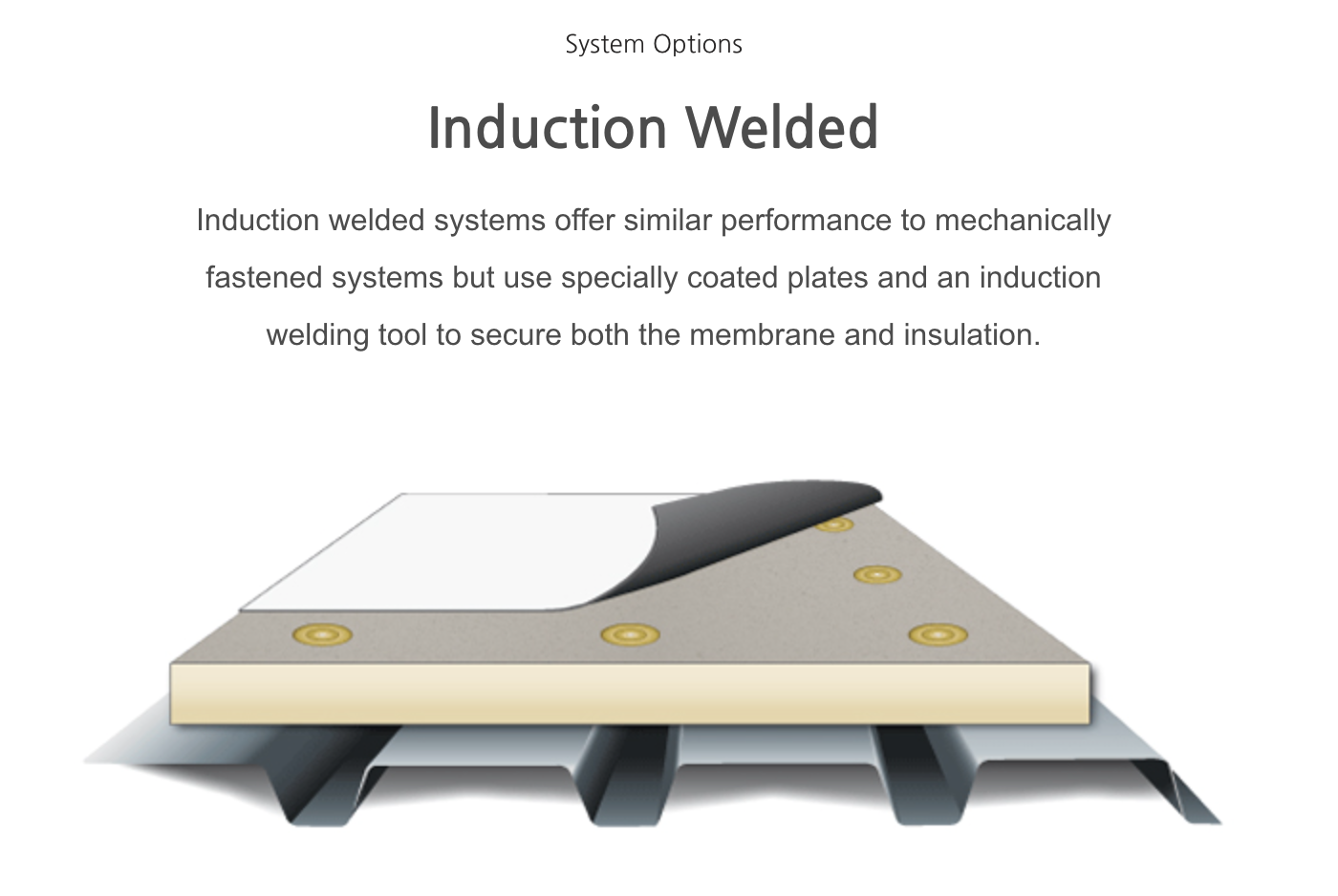
Induction Welded Systems
Induction welded systems use specially coated plates that are welded to the membrane using induction equipment. The membrane remains continuous with fewer exposed fasteners.
Common reasons this option is selected:
- Performance comparable to mechanically fastened systems
- Reduced membrane penetrations
- Clean finished appearance
- Useful in specific wind or design scenarios
Typically used when performance requirements and installation logistics support the use of specialized equipment.
Not sure which attachment method fits your building or project requirements?
System selection support is available to help align performance goals, installation conditions, and warranty pathways.
What problems does commercial roofing support solve for contractors and building owners?
Commercial roofing delays and cost overruns are often caused by unclear assemblies, inconsistent details, and late documentation work. Early technical roofing support is designed to reduce friction in areas that commonly slow projects down:
Unclear assemblies during bid
leading to mismatched pricing and scope gaps
Detail ambiguity at edges, penetrations, and drains
leading to RFIs and field variation
Late documentation work
leading to closeout delays and warranty confusion
Spec conflicts and substitution pressure
leading to rework and schedule risk
Who is this roofing support designed for?
Roofing contractors
bidding or installing TPO, PVC, and EPDM systems
Support for contractors bidding or installing TPO, PVC, and EPDM systems, including assembly letters, submittals, and bid-phase clarity to reduce scope gaps and documentation delays.
Building owners and owner reps
planning commercial roof replacement
Support for building owners planning commercial roof replacement, including system selection, bid comparison, and early warranty pathway planning without unnecessary technical complexity.
Architects and consultants
developing specifications and details
Support for architects and consultants developing buildable details and clean specification language aligned with project requirements.
How do contractors get assembly letters and submittal packages for commercial roofing projects?
Contractors use this support for assembly direction, submittal structure, and bid-phase clarity on commercial single-ply projects in Greater Orlando. The goal is to reduce scope gaps, align documentation, and keep projects moving through bid and closeout phases.
Most common contractor support requests:
- Assembly letters and assembly direction
- Submittal package structure and buildout
- Detail clarification (edges, penetrations, drains, transitions)
- Scope alignment for comparable bidding
- Early coordination to reduce closeout friction
Include project county/city and bid date for fastest turnaround.
What spec support is available for single-ply commercial roofing systems?
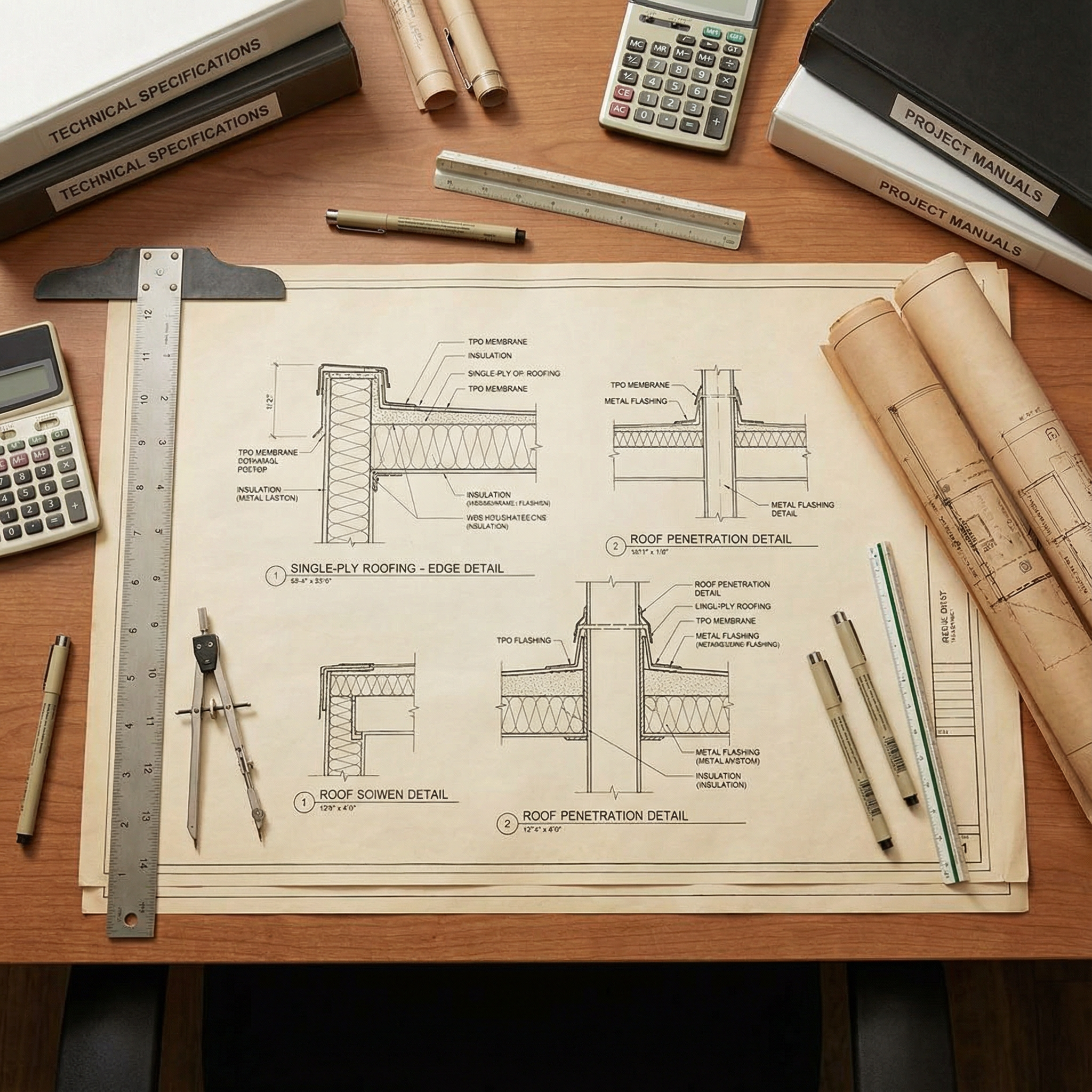
Specifier support focuses on buildable details and clean spec language for TPO, PVC, and EPDM systems—especially during bid cycles where substitutions create confusion.
Specifier support includes:
- Detail support (edge conditions, penetrations, drains, transitions)
- Spec language support aligned to system intent
- Bid-phase alignment to reduce substitution chaos
- Assembly clarity that reduces RFIs and field interpretation
How do building owners compare bids and choose the right roof system?
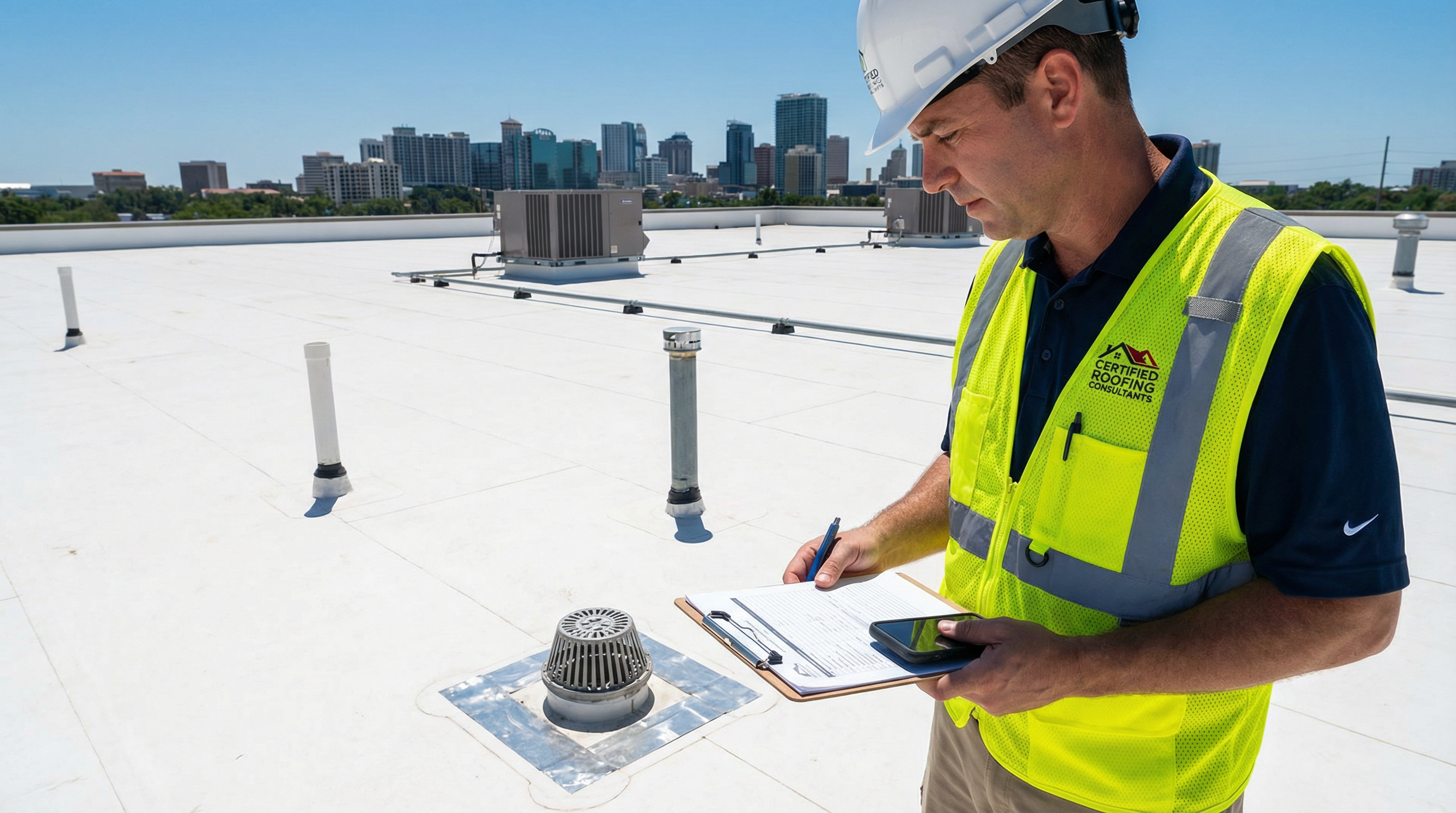
Building owners get the best outcomes when bids are based on comparable scope, system direction is clear early, and warranty pathways are planned from the start. This support helps owners make confident decisions without getting buried in technical jargon or non-comparable scopes.
Owner support focuses on:
- Comparing bids on equal footing (avoiding scope gaps)
- Understanding system options (TPO vs PVC vs EPDM) based on building use
- Planning warranty pathways early in the process
- Connecting with qualified contractors for project execution
Which single-ply roof system is right for your Central Florida building?
TPO Systems
most common commercial option
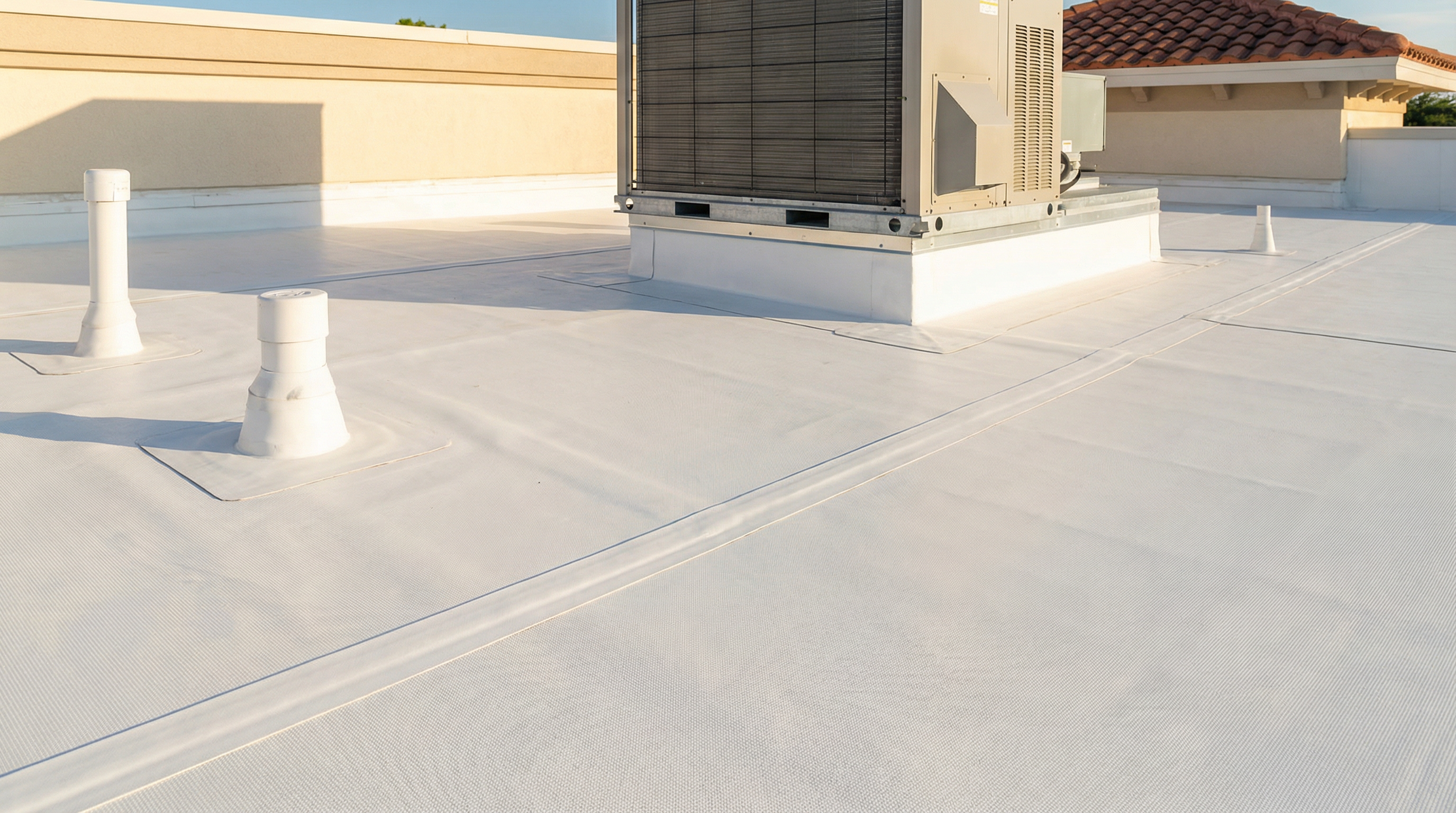
TPO is commonly selected across Greater Orlando for industrial, retail, and office buildings. Long-term outcomes depend on assembly selection, detail execution, and accessory integration.
PVC Systems
demanding-use environments
PVC is often evaluated for demanding-use applications such as hospitality and restaurant facilities. System direction should reflect building use, exposure, and scope requirements.
EPDM Systems
specified or portfolio-driven use
EPDM is used less frequently in Florida than TPO or PVC, but support is available when an EPDM system is specified or required for portfolio consistency.
How do you choose between TPO vs PVC vs EPDM for a commercial roof in Florida?
System selection is best handled by matching the membrane type and assembly direction to building use, exposure conditions, and project constraints.
TPO is often a fit when…
- the project is a standard commercial building type
- large roof area and schedule/budget predictability are priorities
- the system intent is straightforward and buildable
PVC is often a fit when…
- the building use creates more demanding conditions (including many restaurants)
- exposure conditions justify a higher-performance direction
- project requirements prioritize system characteristics tied to use case
EPDM is often a fit when…
- EPDM is specified by the design team
- project standards require consistency across a broader portfolio
- the assembly direction aligns with scope and detailing requirements
Submit a request with building type, city/county, and timeline.
What affects commercial roofing warranty pathways?
Warranty pathway outcomes are influenced by early alignment on assembly direction, consistent detailing, and documentation readiness. The most common issues occur when documentation and assembly intent are addressed late.
Warranty pathway drivers often include:
- Assembly selection and scope clarity
- Detail execution at edges, penetrations, drains, and transitions
- Accessory integration and transitions
- Documentation readiness during closeout
If long-term planning matters on a project, request support early (design + bid phase).
What commercial roofing projects are common in Orange, Seminole, Volusia, Osceola, and Brevard Counties?
Single-ply roof systems are commonly evaluated or installed across Greater Orlando for:
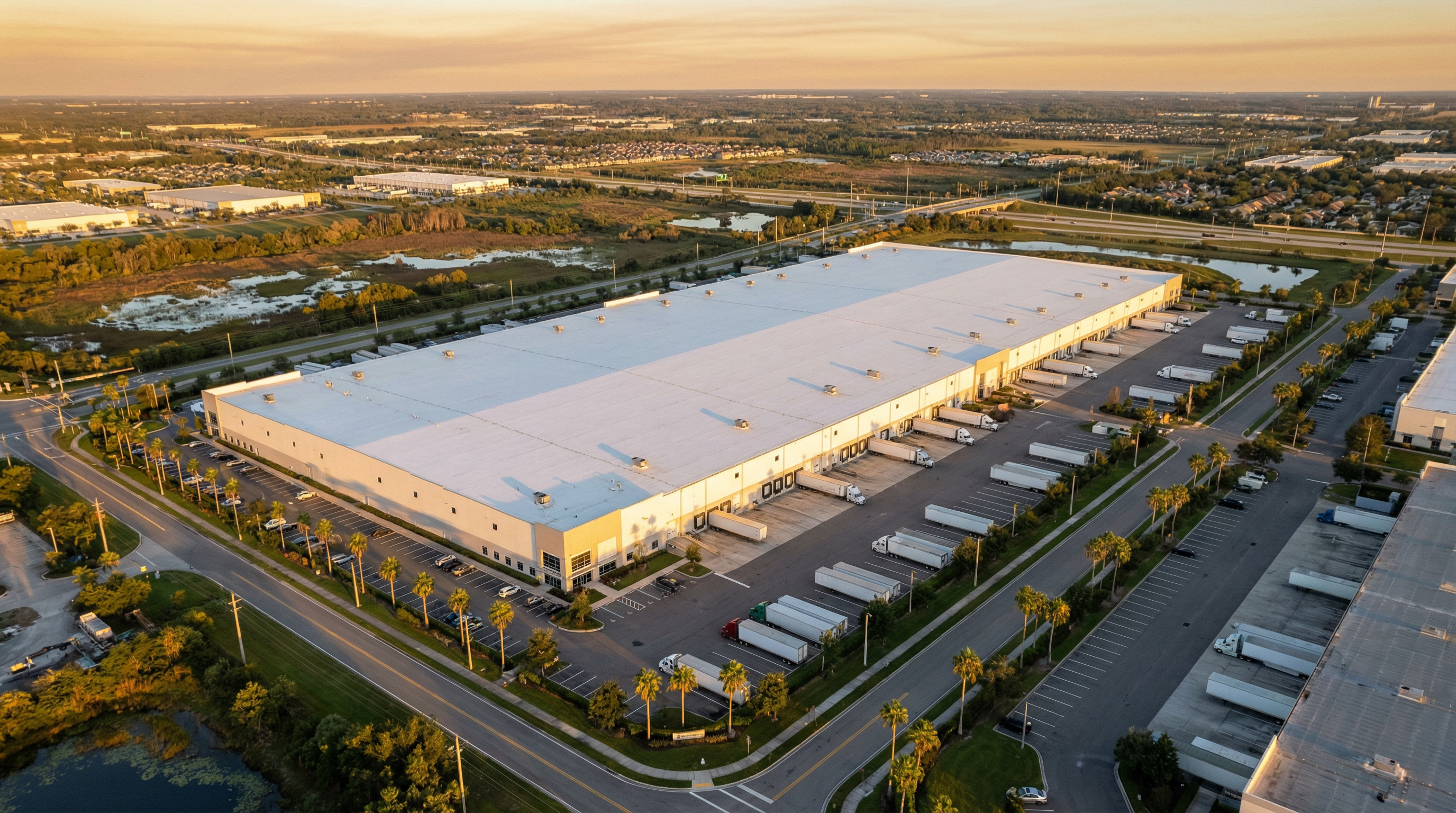
Industrial and warehouse facilities
Retail centers
Office buildings
Restaurants and hospitality facilities
Submit city/county and timeline to get routed correctly.
Service Area — Greater Orlando / Central Florida
Support is available across Orange, Seminole, Volusia, Osceola, and Brevard Counties, serving Orlando, Winter Park, Sanford, Daytona Beach, Kissimmee, Melbourne, and surrounding communities throughout Central Florida.
Orange County
Seminole County
Volusia County
Osceola County
Brevard County
Include your project location for fastest routing.
About
This commercial roofing support is provided by an experienced manufacturer representative serving Greater Orlando. Support is available for TPO, PVC, and EPDM single-ply systems and focuses on assembly documentation, submittals, buildable details, and warranty planning.
What Clients Say
"Fast turnaround on assembly letters and submittals. Helped us meet a tight bid deadline without compromising documentation quality."
Roofing Contractor
Orange County
"Details were clear and buildable. Reduced our RFIs significantly and kept the project on schedule through coordination phase."
Architect
Central Florida
"Helped us compare bids on equal footing. System selection guidance made the decision process much clearer for our facility team."
Building Owner
Brevard County
Request Support
Contractors • Specifiers • Owners — Greater Orlando TPO/PVC/EPDM Projects
Primary method: Submit the form below with project details. Phone available if urgent.
Contact Information
Quick Links by Role:
- Contractors: Assembly letters + submittal packages
- Specifiers: Details + spec language
- Owners/Owner Reps: System selection + planning support